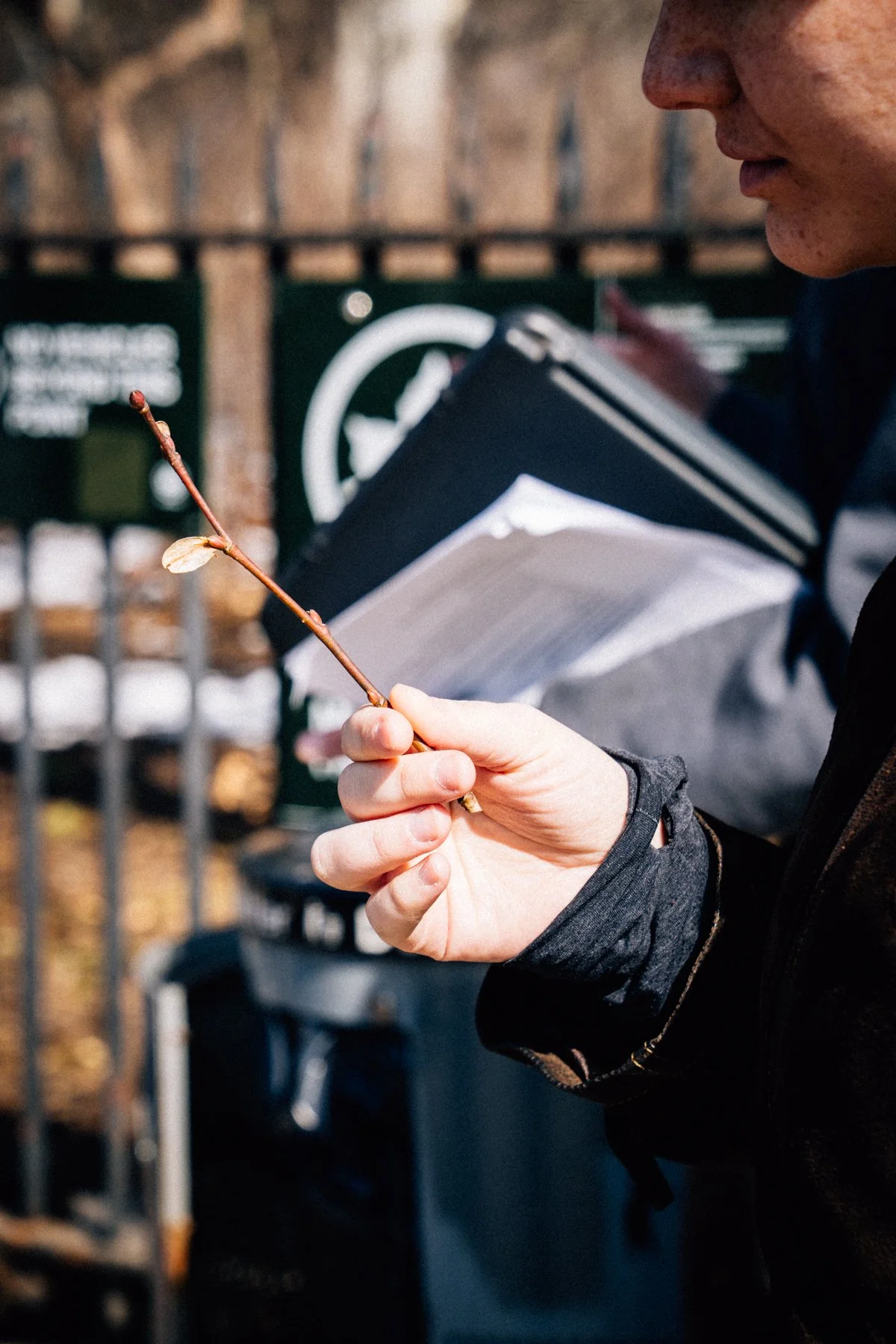
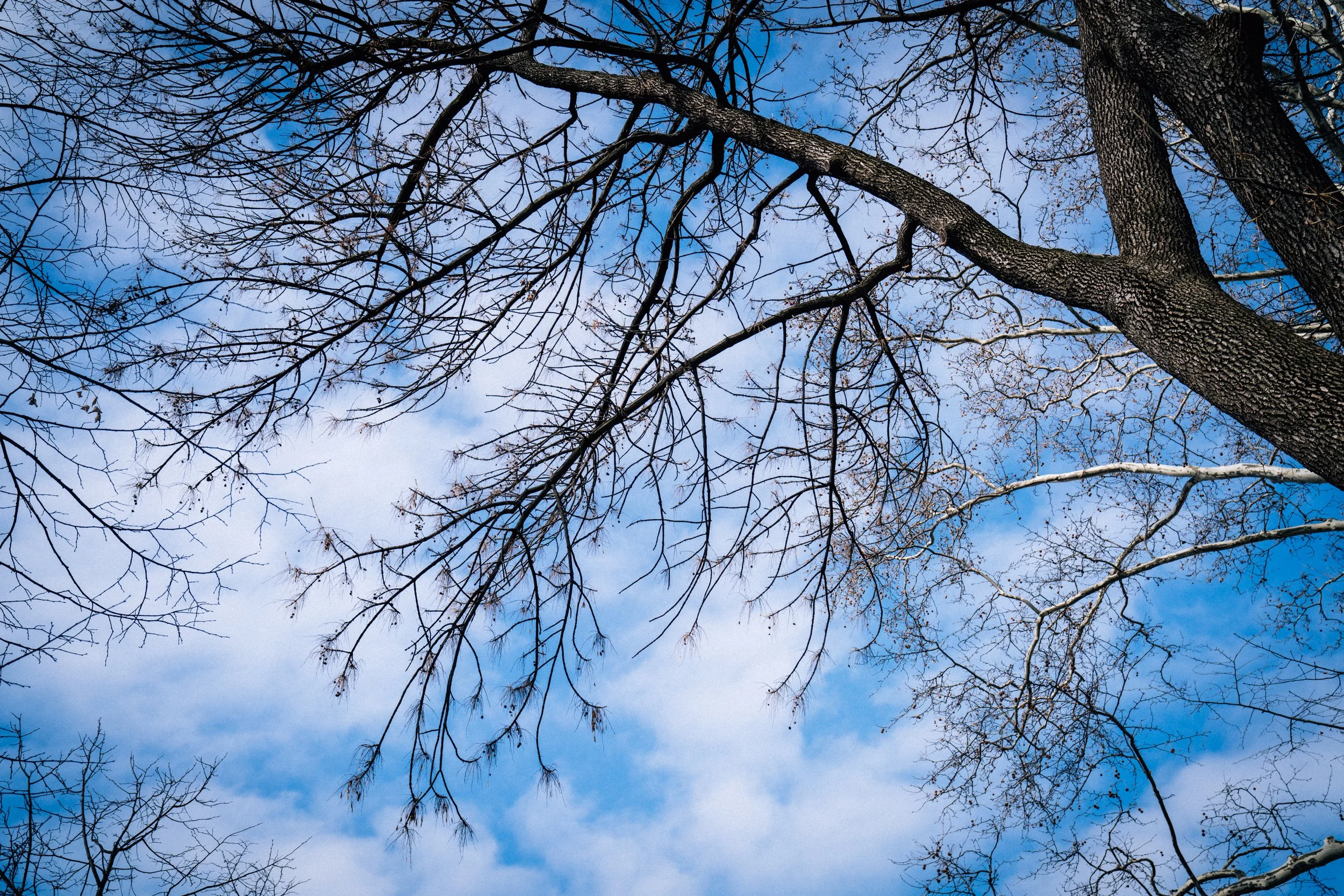
On a recent winter tree ID walk through McGolrick Park, neighbors gathered to learn how to spot and name trees when they’re bare. The walk, led by the NYC Parks Department’s Super Stewards, focused on identifying trees through their bark texture, branching patterns, and winter buds. Even in the colder months, the park becomes an open-air field guide.
One of the first clues to look for in identifying a tree is the branching pattern. If a tree has opposite buds (arranged in pairs directly across from each other), that immediately narrows your options down using the acronym MAD Horse: Maple, Ash, Dogwood, and Horse Chestnut. Spotting opposite branching can make identification much easier from the start.
Ash trees stand out with their distinctive diamond-patterned bark and lingering seed pods. Our park has one on the Russell St. side close to the mid-block entrance!
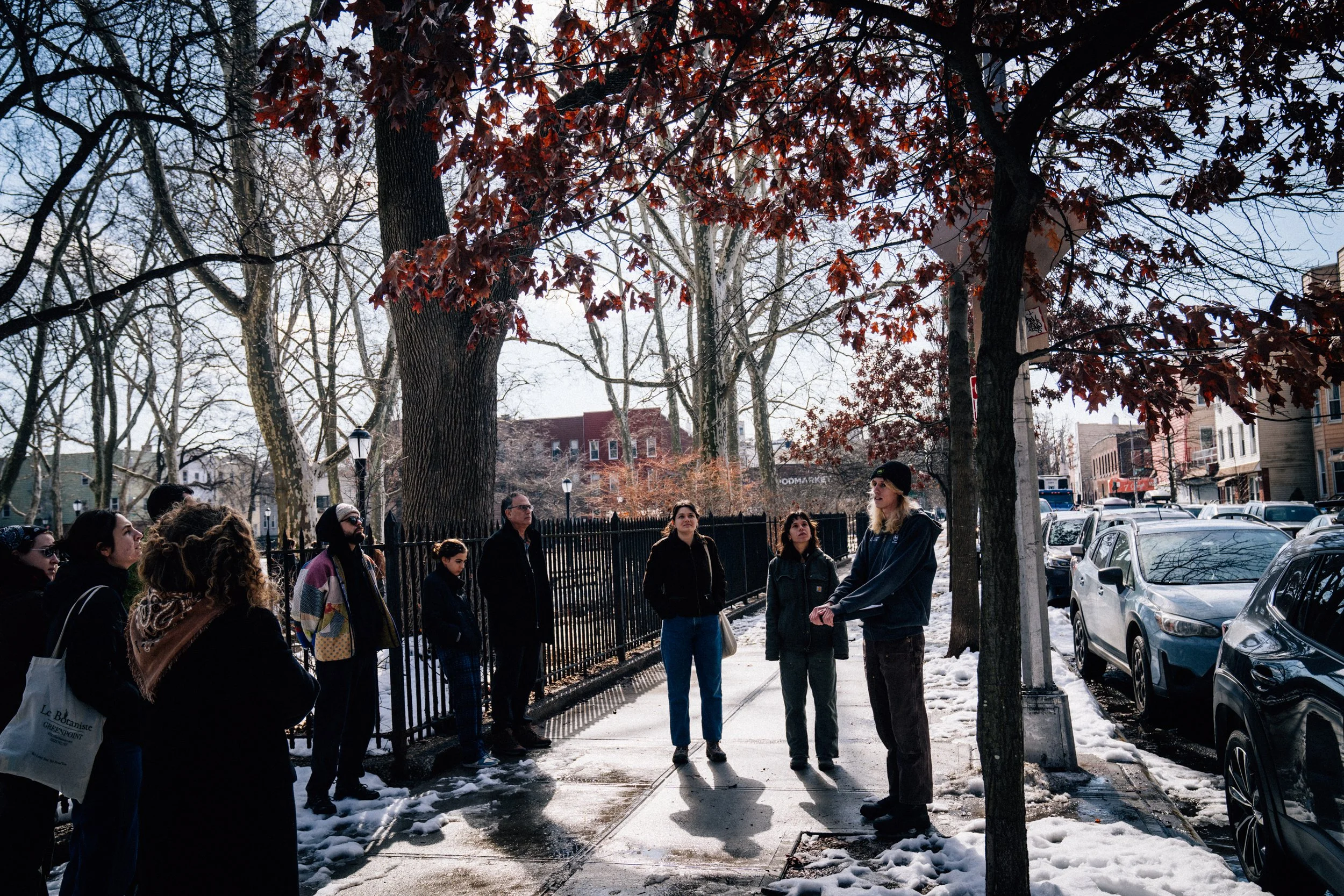
Oaks are some of the park’s most notable trees, alongside London Planes. We compared red oaks, with pointed lobes and ski-track bark, to white oaks, with rounded lobes and flakier bark. We also discussed marcescence, the process by which some oaks retain their brown leaves through winter instead of shedding them.
Beyond oaks and ash, trees around McGolrick offer a diverse array of species to examine in winter. We identified ginkgo, a living fossil with distinctive spur shoots; eastern redbud, known for its early pink blooms and buds that emerge directly from branches; linden, with its uneven heart-shaped leaves and recognizable buds; Kentucky coffeetree, with large, banana-like seed pods; and native sumac, whose fuzzy red fruit feeds birds throughout the season.
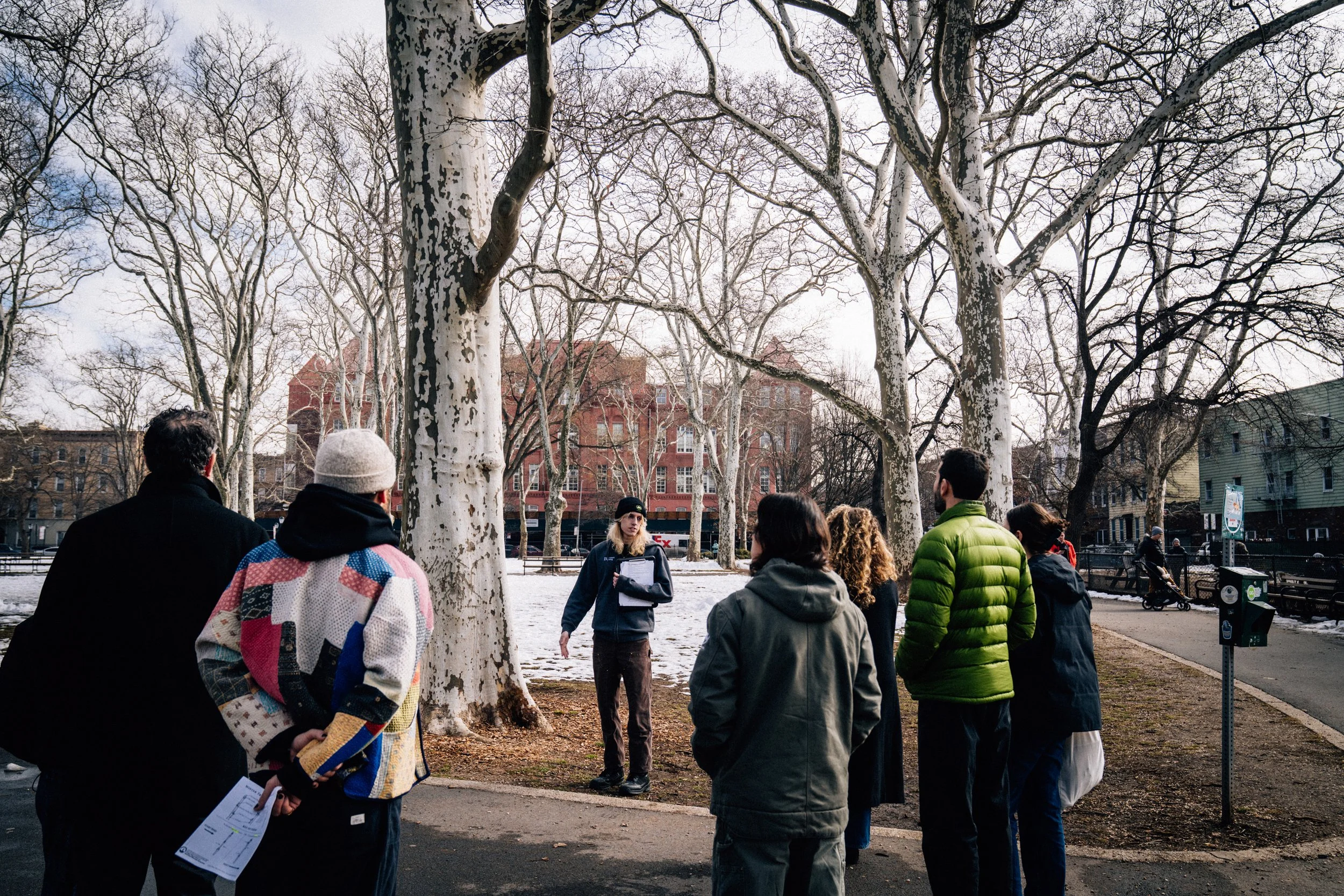
We also discussed how tree health is assessed, including trunk diameter (DBH), soil compaction, and root space. Mature trees offer significantly greater benefits, from stormwater absorption to carbon sequestration, which is why caring for young street trees is so important.
Winter simply encourages you to slow down and notice what has always been there. Many thanks to NYC Parks Super Stewards for your expertise and guidance!