
Nature Walk, Pollinators + Other Insects, May 2, 2026
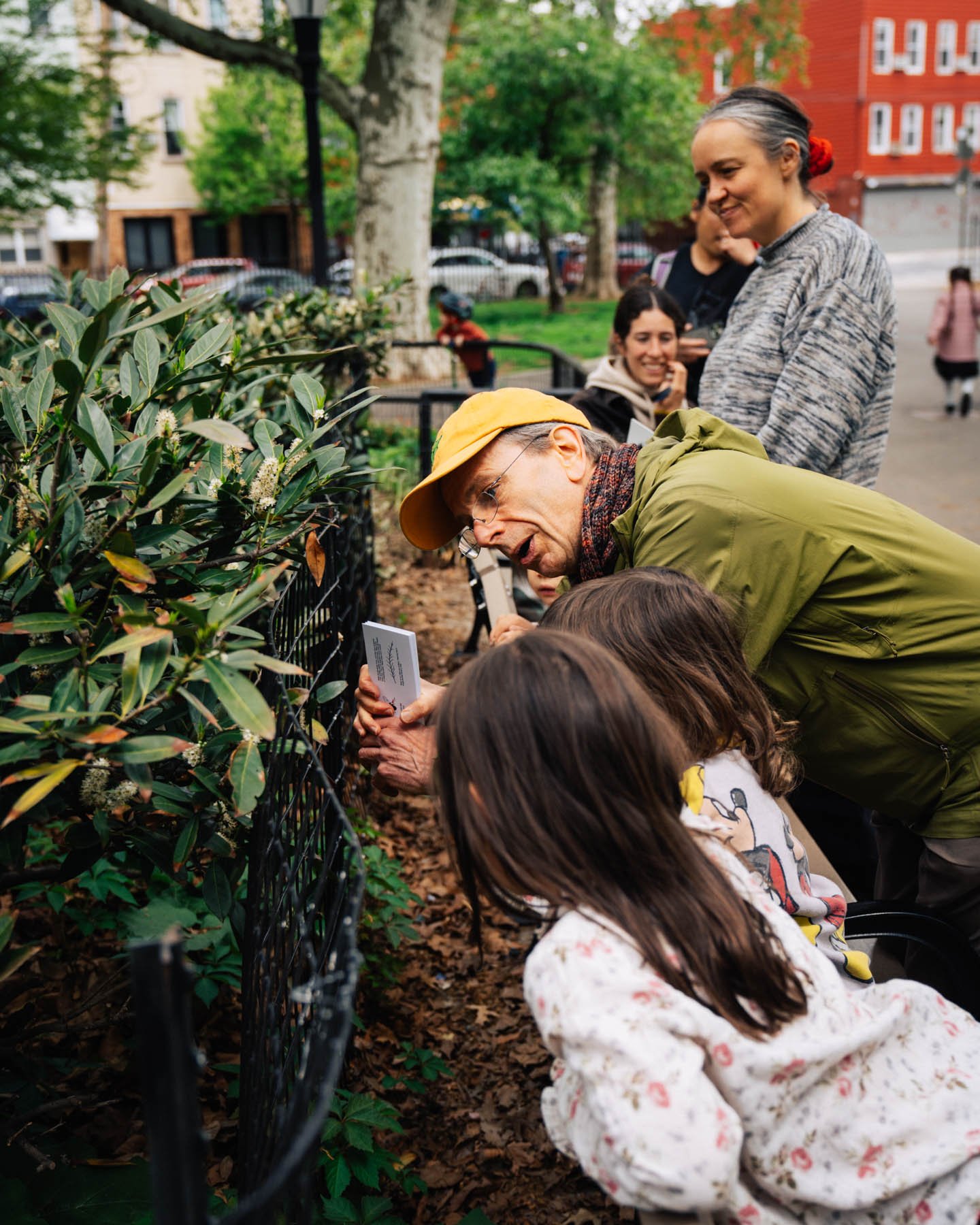
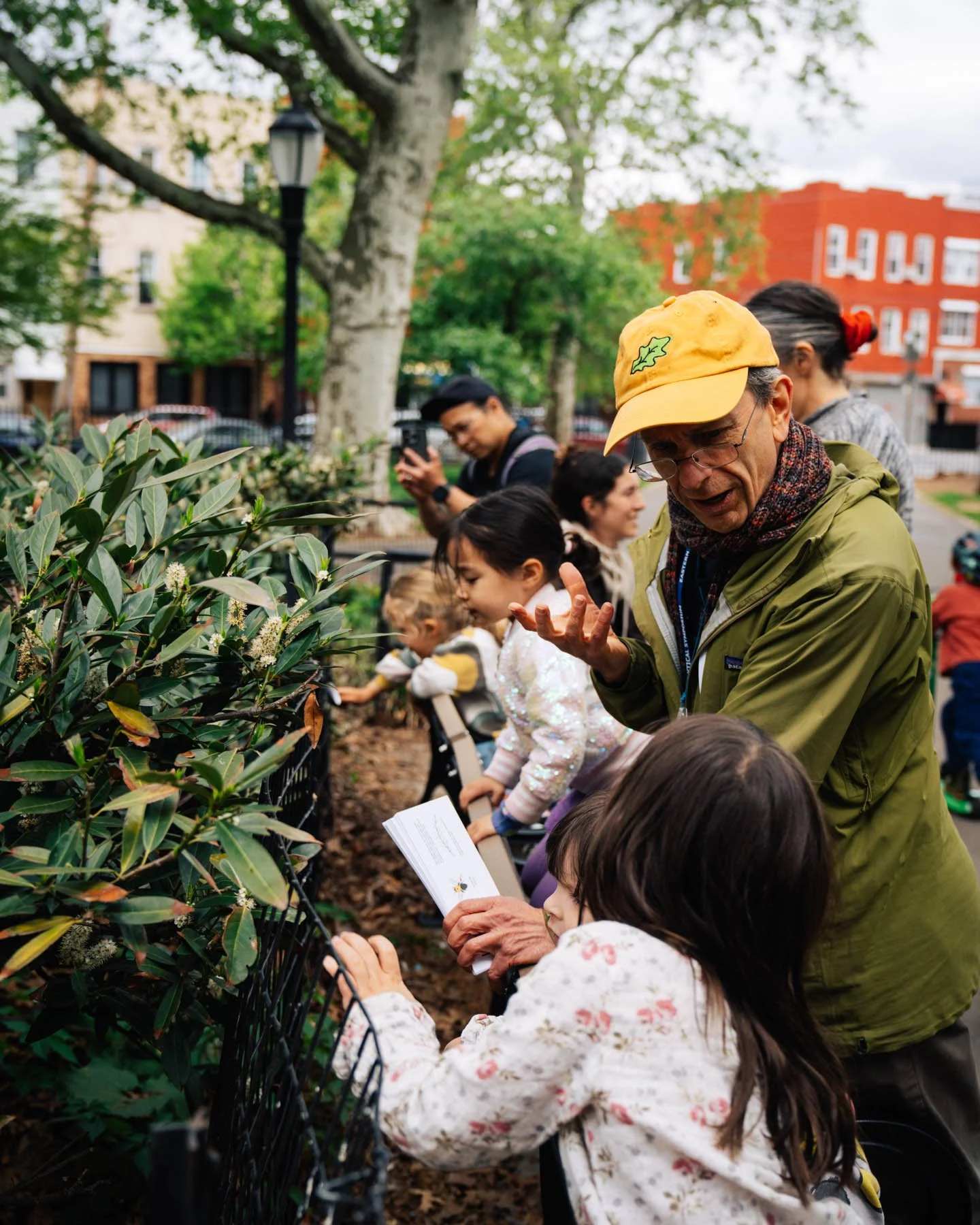
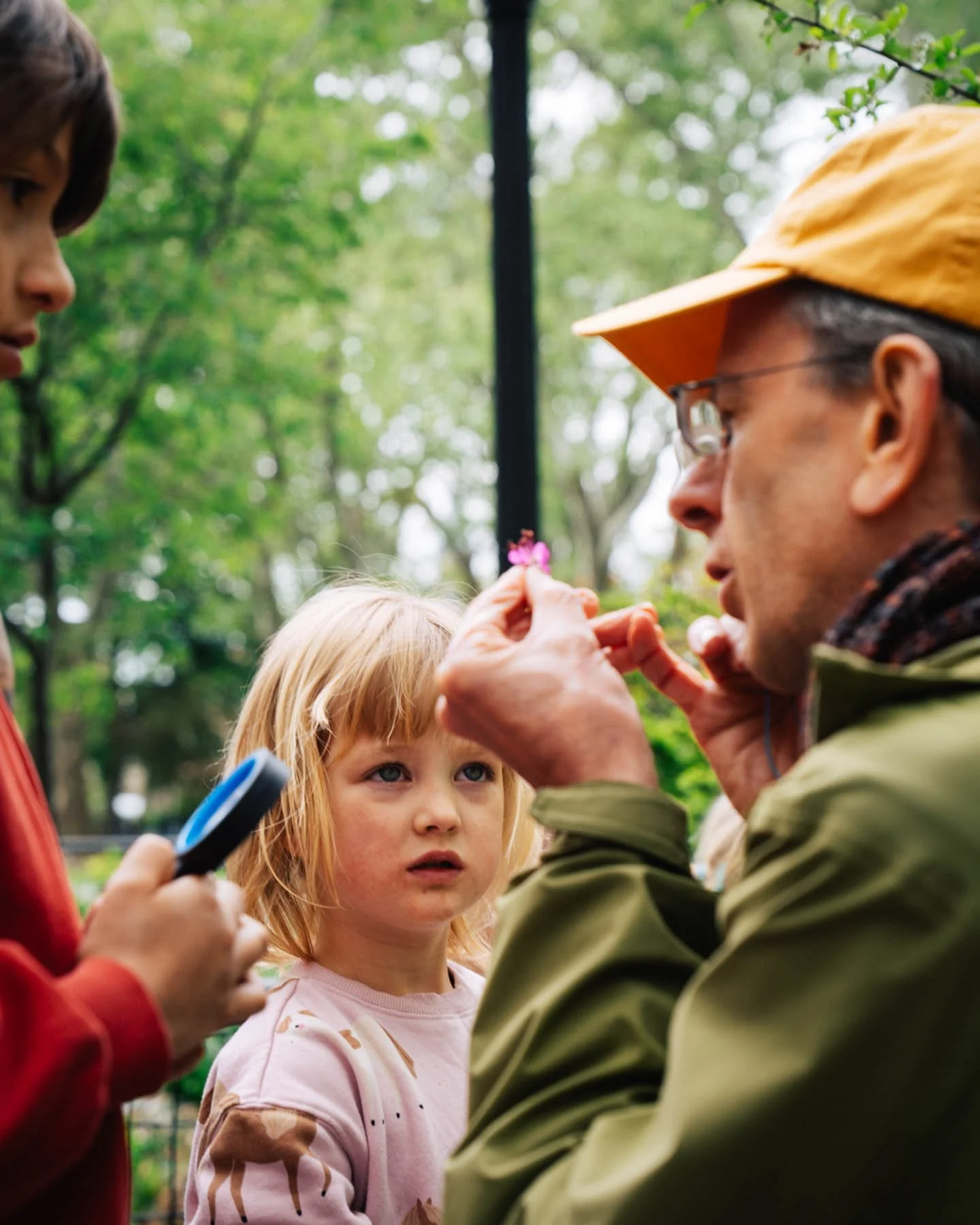
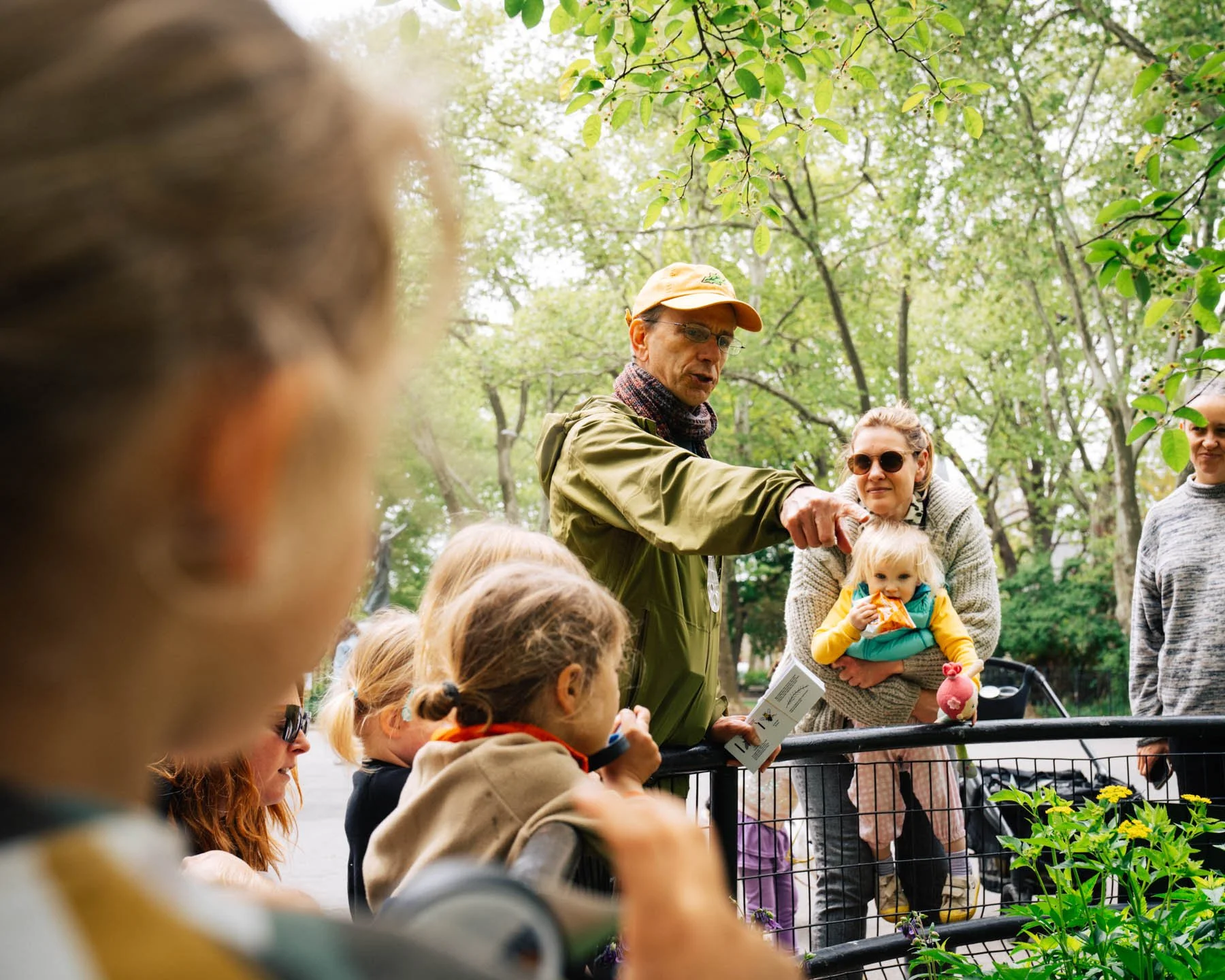
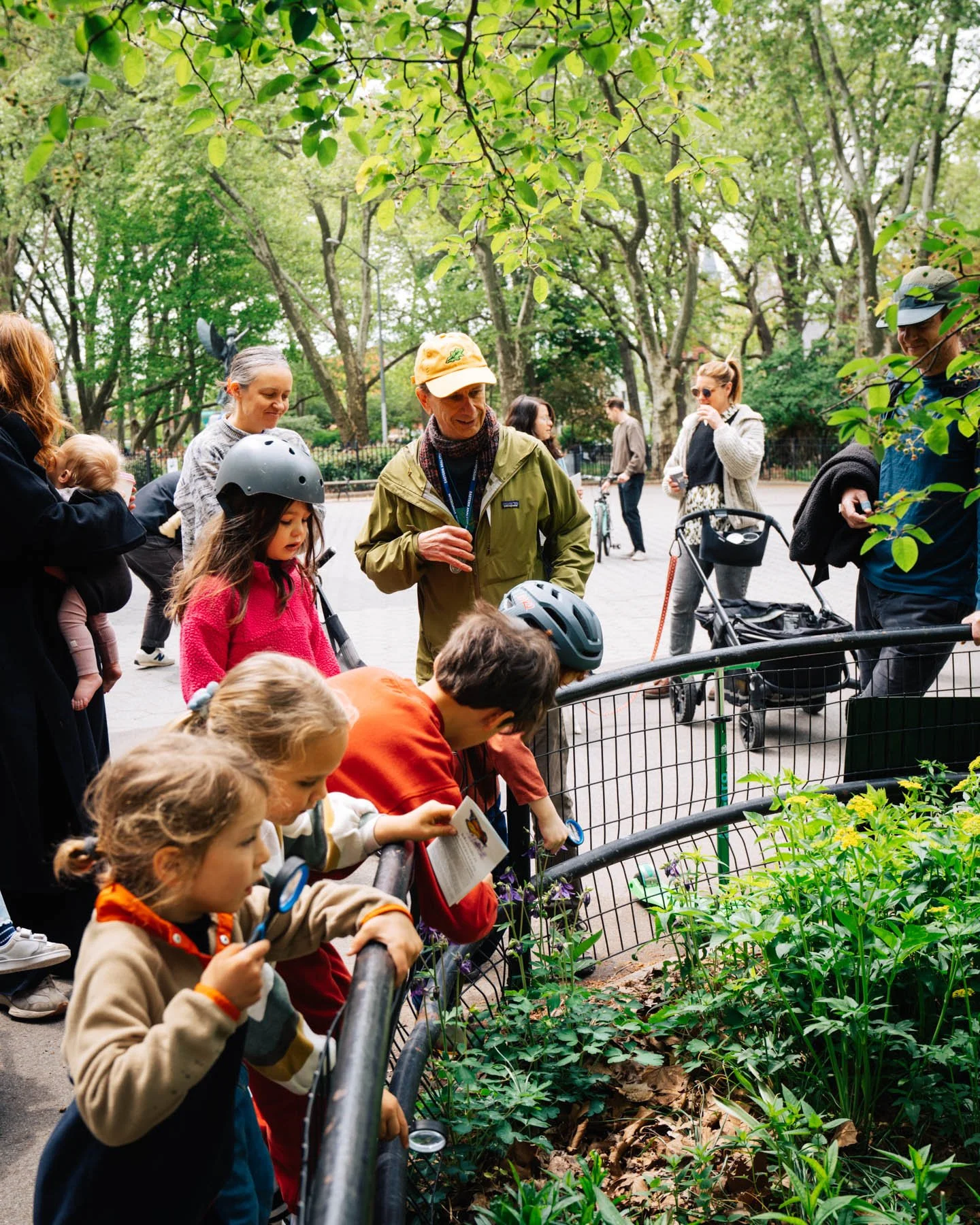
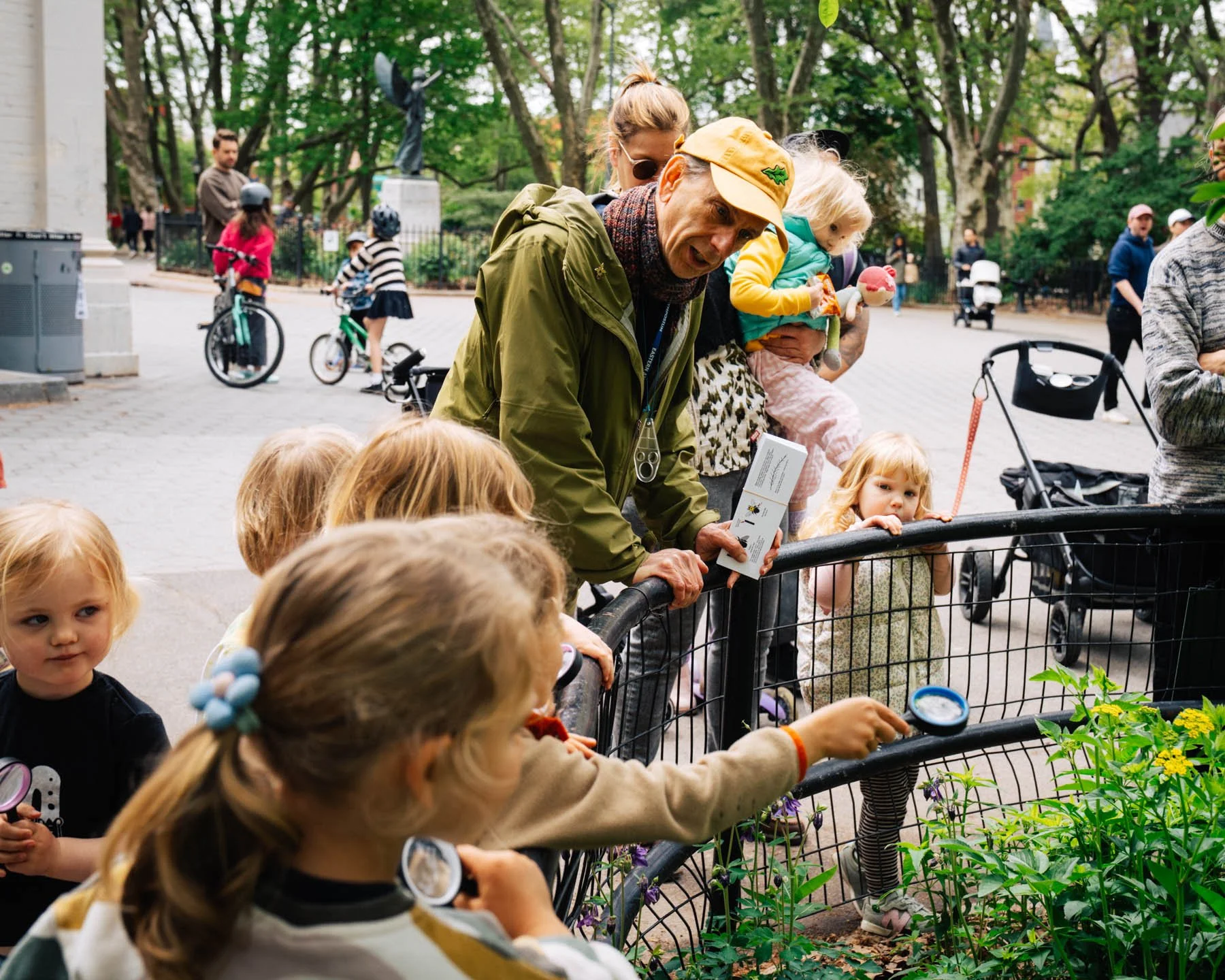
Jay Holmes from the American Museum of Natural History returned to McGolrick Park for his third time to teach us all about pollinators! Though the day was chilly and overcast (a climate that tends to keep insects and pollinators hiding out), we managed to see a number of them pollinating our park’s trees and plants.
With magnifying glasses in hand, Jay and the group carefully surveyed the park for pollinators.
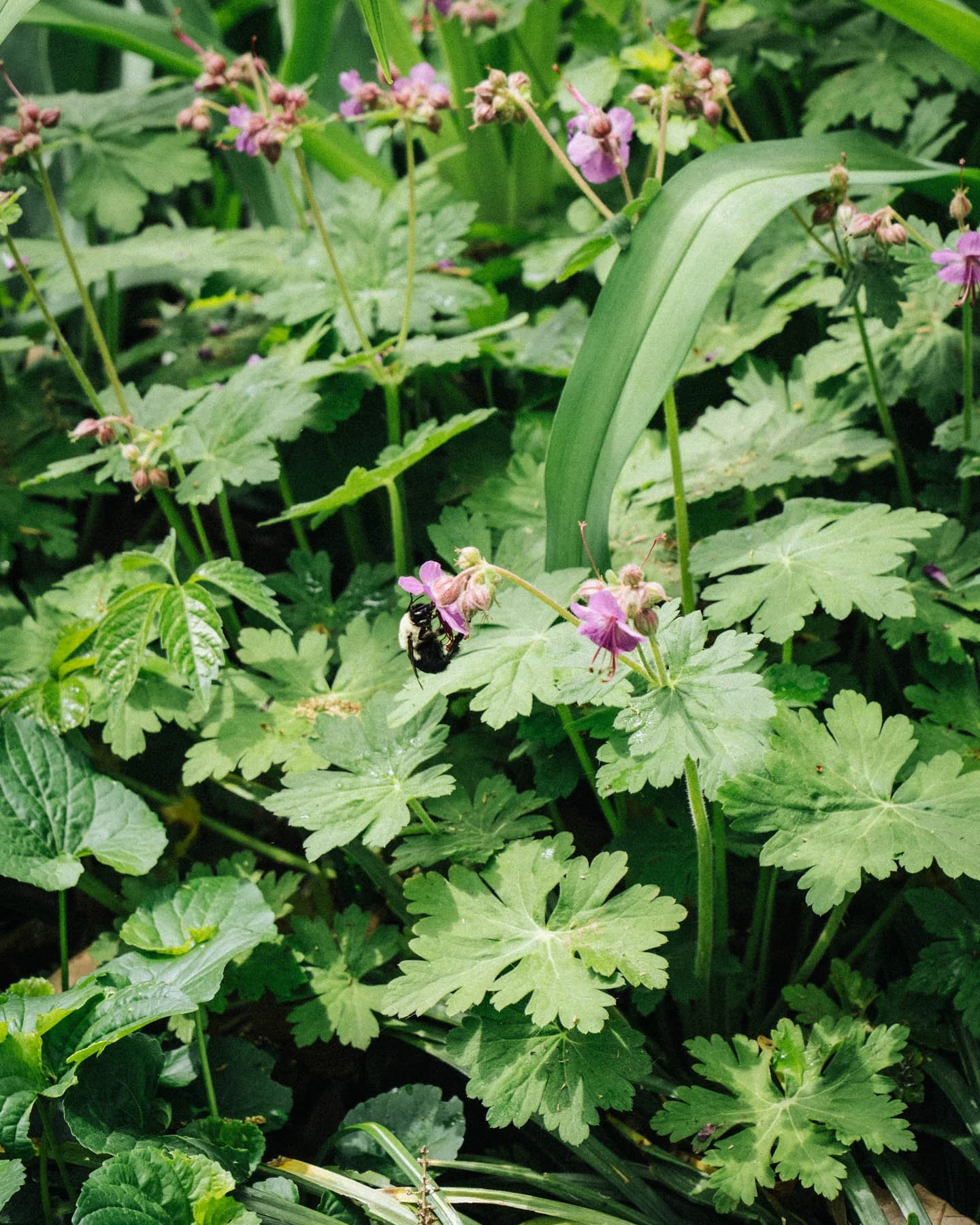
Among the insects observed were the Eastern Calligrapher hover fly, the honey bee and fuzzy bumblebee, also known as the Common Eastern Bumblebee. Though it was cold, our park is usually home to Brown-belted bumblebees, Carpenter bees, and Leaf-cutter bees. Participants also learned about the main insect pollinator groups, including their life cycles and habitat requirements.
Bumblebee video courtesy of Jay Holmes
Jay told the group that the big bees seen in the garden beds were queens. We also learned that male bees cannot sting because they lack the stinging apparatus, making them safe to handle. Jay noted that most bees that aren’t honey bees are solitary creatures and very unlikely to sting a human, especially near the flowers, as they have no large hive to protect and no evolutionary incentive to sting.
Along the walk, we took close looks at the variety of flower shapes from the large flat flower heads of the Golden Alexander to the fancy Red Columbine with its crown of nectar spurs and “fireworks spray” of pollen-bearing stigmas. Jay and crew even we did a little pollination of their own, moving Columbine pollen between plants in different flowerbeds.
The plethora of Violets filled the park with early spring purples that you have to get down close to, to really enjoy.
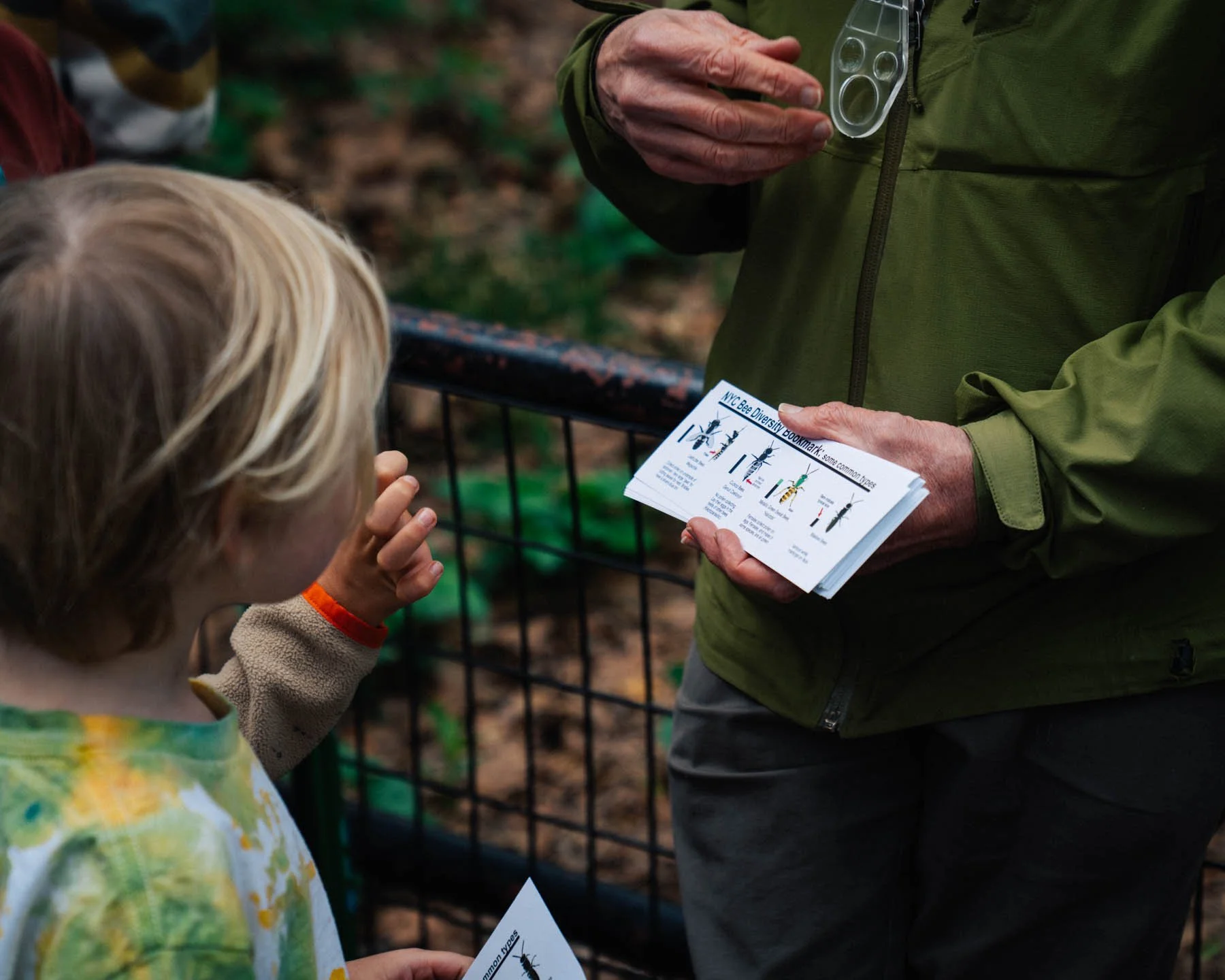
Jay brought along several other insect specimens for walk participants and other park-goers to view with microscopes and magnifying glasses.
To learn more about how to identify the types of bees, visit the Nature Walks Resources section, where you can find quick reference guides made using the NYC Bumble Bee and NYC Bee Diversity bookmarks Jay shared during the walk.
It is truly amazing how these tiny heroes help keep McGolrick Park’s ecosystem thriving!
Private support for McGolrick Nature Walks is provided by City Parks Foundation and Partnerships for Parks through the NYC Green Fund.